


Dr. Kapadia is a highly skilled and compassionate dentist proudly serving the Metuchen community. Known for his patient-first approach, he focuses on building trust through open communication and personalized care. He takes the time to understand each patient’s concerns, creating tailored treatment plans that support both oral health and overall well-being. By incorporating advanced dental technology, including digital imaging and co-diagnostics, Dr. Kapadia ensures precise and collaborative care. Whether it is preventive care or a complete smile transformation, he delivers a comfortable and reassuring experience. Outside the practice, he enjoys time with his wife Nicole, their puppy Lola, and exploring travel, food, and sports.
Dr. Joseph is a dedicated dentist who combines artistic precision with genuine compassion to create natural, confidence-boosting smiles. With advanced expertise in shade matching and ceramics, he delivers highly personalized results that enhance both appearance and function. A top-10 graduate of the Rutgers School of Dental Medicine, he was inducted into the prestigious Omicron Kappa Upsilon Honor Dental Society. He further refined his skills during residency at Newark Beth Israel Medical Center, training alongside leading specialists. Known for his warm, attentive approach, Dr. Joseph ensures every patient feels heard, comfortable, and confident throughout their dental journey.
A brighter smile is something many patients want. Teeth whitening is one of the most popular ways to improve the appearance of your smile. But if you already have crowns or veneers, things can get confusing. Many patients ask a simple question. Can these restorations be whitened just like natural teeth?
At House of Dentistry, this is a common concern. Patients want their smile to look even and natural, not patchy or mismatched. Understanding how whitening works and how it affects different dental materials can help you make better decisions. With guidance from Dr. Kapadia, a Diamond Provider and Top 1% Invisalign provider in North America, and Dr. Joseph, you can plan your smile improvements the right way.
Let’s break it down in simple terms, so you know exactly what to expect.
What Are Crowns and Veneers?
Before talking about whitening, it is important to understand what crowns and veneers are.
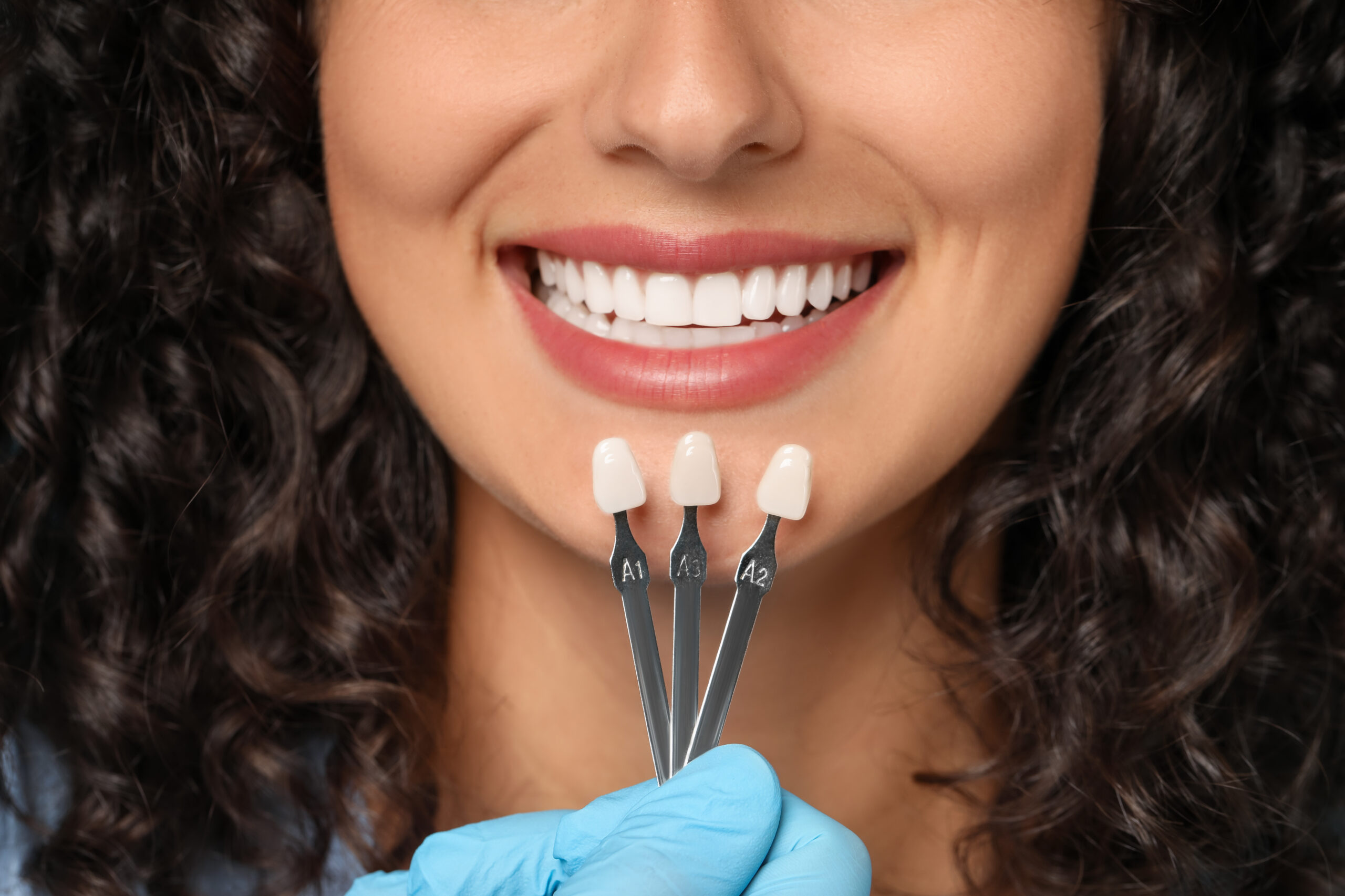
Crowns are caps placed over damaged or weakened teeth, as part of cosmetic dental solutions discussed by Dr. Kapadia. They cover the entire tooth and restore its shape, strength, and appearance. Veneers are thin shells placed on the front surface of teeth. They are mainly used to improve the look of your smile.
Both crowns and veneers are usually made from materials like porcelain or ceramic. These materials are designed to match the color of your natural teeth and stay stable over time.
How Teeth Whitening Works
Teeth whitening works by using bleaching agents like hydrogen peroxide or carbamide peroxide. These agents break down stains on natural teeth and lighten their color, with tooth color concerns evaluated by Dr. Joseph.
Natural teeth have a slightly porous surface, which allows whitening agents to penetrate and remove deep stains caused by coffee, tea, smoking, or aging.
This is why whitening works well on natural enamel. But the same process does not apply to crowns or veneers.
Can You Whiten Crowns or Veneers?
The short answer is no. Crowns and veneers cannot be whitened using traditional whitening treatments.
These restorations are made from non-porous materials, such as porcelain or ceramic. Whitening agents cannot penetrate their surface. This means their color will stay the same no matter how many whitening treatments you try, as Dr. Kapadia explains whitening options for crowns and veneers.
This is one of the most important things patients need to understand. Whitening only affects natural teeth, not dental restorations.
Why This Can Be a Problem
When you whiten your natural teeth, they become lighter. But your crowns or veneers will stay the same shade, which is an important consideration in cosmetic dental treatments. This can create a noticeable difference in your smile.
For example, if you have a crown on a front tooth and you whiten your natural teeth, the crown may look darker in comparison. This can make your smile look uneven.
At House of Dentistry, Dr. Kapadia and Dr. Joseph often see patients who are surprised by this result. That is why planning is very important before starting any whitening treatment.
What Are Your Options?
Even though crowns and veneers cannot be whitened, you still have practical options.
- Whiten Natural Teeth First
If you are planning to get crowns or veneers, it is best to whiten your natural teeth first. Once you reach your desired shade, your dentist can match your restorations to that color.
This helps create a uniform and natural-looking smile.
- Replace Old Crowns or Veneers
If you already have crowns or veneers that no longer match your teeth, replacement may be the best option, as part of the cosmetic dental solutions discussed by Dr. Kapadia. Your dentist can create new ones that match your current tooth color.
This is especially helpful if your natural teeth have changed shade over time.
- Professional Cleaning
Sometimes crowns and veneers can look dull due to surface stains. A professional cleaning can remove these stains and improve their appearance.
While this will not whiten them, it can make them look brighter and cleaner.
- Consider a Full Smile Plan
In some cases, a complete smile plan may be recommended. This involves a combination of whitening and restorations to achieve a balanced and natural result.
What Causes Discoloration in Crowns or Veneers?
Even though crowns and veneers do not respond to whitening, they can still lose their brightness over time.
Common reasons include:
- Surface stains from coffee, tea, or smoking
- Wear and tear over the years
- Changes in surrounding natural teeth
- Poor oral hygiene
Keeping your restorations clean and well-maintained is key to preserving their appearance.
How to Keep Your Smile Bright
Maintaining your smile does not have to be complicated, especially when following the cosmetic dental solutions discussed by Dr. Kapadia. Simple habits can make a big difference.
Brush your teeth twice a day using a soft toothbrush. Use gentle motions and focus along the gum line. Floss daily to remove buildup between teeth.
Visit your dentist regularly for cleanings and checkups. Professional care helps maintain both natural teeth and restorations.
Try to limit foods and drinks that stain teeth. If you do consume them, rinse your mouth with water afterward.
At House of Dentistry, Dr. Kapadia and Dr. Joseph guide patients in properly caring for their smiles.
When Should You Talk to Your Dentist?
If you are considering whitening and have crowns or veneers, it is always best to consult your dentist first.
They can evaluate your current smile, explain your options, and create a plan that works for you.
This helps avoid uneven results and ensures you get the outcome you want.
Common Mistakes to Avoid
Many patients try over-the-counter whitening products without understanding their limitations.
Some common mistakes include:
- Whitening without checking existing restorations
- Expecting crowns or veneers to change color
- Overusing whitening products
- Ignoring professional advice
These mistakes can lead to frustration and uneven results.
Why Choose House of Dentistry?
Patients choose House of Dentistry because of:
- Top 1% Invisalign experience in North America
- Advanced digital technology
- Personalized care
- Diamond Provider distinction
- Comprehensive services in one location
FAQ’s
1. Can whitening toothpaste change the color of crowns or veneers?
No. Whitening toothpaste can remove surface stains, but cannot change the actual color of crowns or veneers.
2. Why do my crowns look darker after whitening my teeth?
Your natural teeth have become lighter, while the crowns stayed the same. This creates a contrast.
3. Can a dentist polish crowns or veneers to make them brighter?
Yes. Professional polishing can remove surface stains and improve their appearance.
4. Should I replace my crown if it does not match my teeth?
If the color difference is noticeable, replacement may be recommended for a better match.
5. Is professional whitening safe if I have veneers?
Yes, but it will only affect your natural teeth. Your dentist will guide you on the best approach.
Conclusion
Crowns and veneers are designed to improve your smile. Still, they do not respond to whitening treatments, as Dr. Kapadia explains whitening options for crowns and veneers. This can create challenges if you are trying to brighten your teeth without a proper plan.
The key is understanding how different materials behave and working with your dentist to achieve a balanced result. Whether it is whitening your natural teeth first or replacing older restorations, the right approach makes all the difference.
At House of Dentistry, Dr. Kapadia, a Diamond Provider and Top 1% Invisalign provider in North America, along with Dr. Joseph, focus on helping patients achieve smiles that look natural, even, and confident.
________________________________________________________________________
Remember
Whitening works only on natural teeth, not crowns or veneers. Plan your treatment with your dentist to avoid uneven results.
Disclaimer
This content is for informational purposes only and does not replace professional dental advice. Please consult a qualified dentist for personalized recommendations based on your oral health needs.


New patients and emergency appointments welcome
732-510-0990
Schedule Now
